

In 2020, “remote work” was a temporary Band-Aid.
By 2023, it was a battleground between executives and employees.
In 2026, it’s now the operating system of modern work.
The office didn’t die. It just stopped being the center of gravity. Workers spread out. Meetings went async. Productivity became measurable instead of performative.
The concept of remote work has enabled the Growth Partners Media team to thrive in a way that wasn’t previously possible. So we took it upon ourselves to research and bring you the latest remote work statistics to share how this working lifestyle is changing the world.
The data represented in this article is the most recent data available on the state of global remote work.
The statistics below reveal the state of remote work in 2026, and what the next evolution of distributed workforces really looks like.
TL;DR – 2026 Remote Work Trends Shaping Working Lives
If you only read one section of this report, make it this one. These are the forces shaping how companies hire, how employees work, and how organizations compete in 2026:
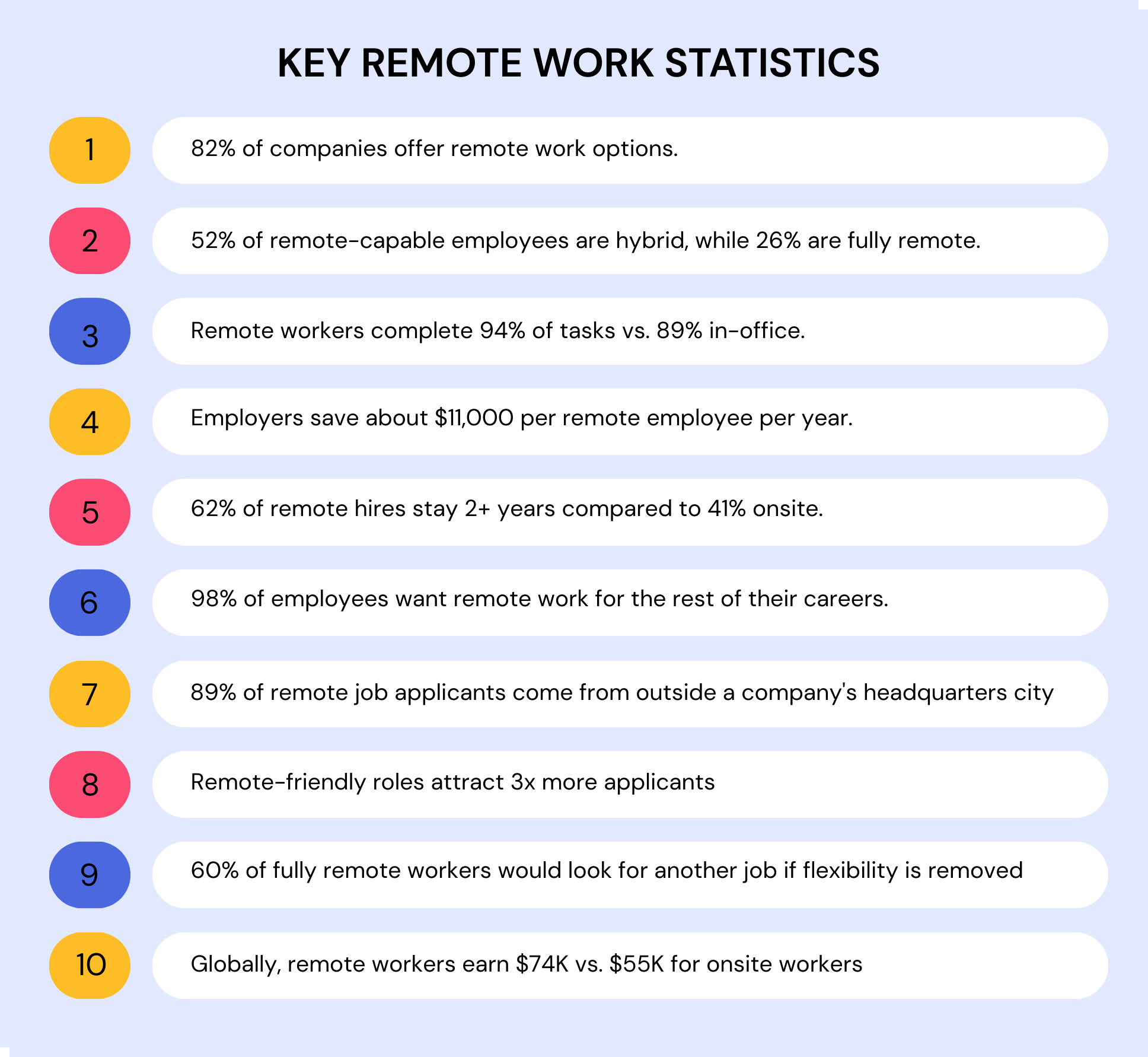
1. 82% of companies offer remote work options.
2. 52% of remote-capable employees are hybrid, while 26% are fully remote.
3. Remote workers complete 94% of tasks vs. 89% in-office.
4. Employers save about $11,000 per remote employee per year.
5. 62% of remote hires stay 2+ years, compared to 41% onsite.
6. 98% of employees want remote work for the rest of their careers.
7. 89% of remote job applicants come from outside a company’s headquarters city.
8. Remote-friendly roles attract 3× more applicants.
9. 60% of fully remote workers would job-hunt if flexibility is removed.
10. Globally, remote workers earn $74K vs. $55K for onsite workers.
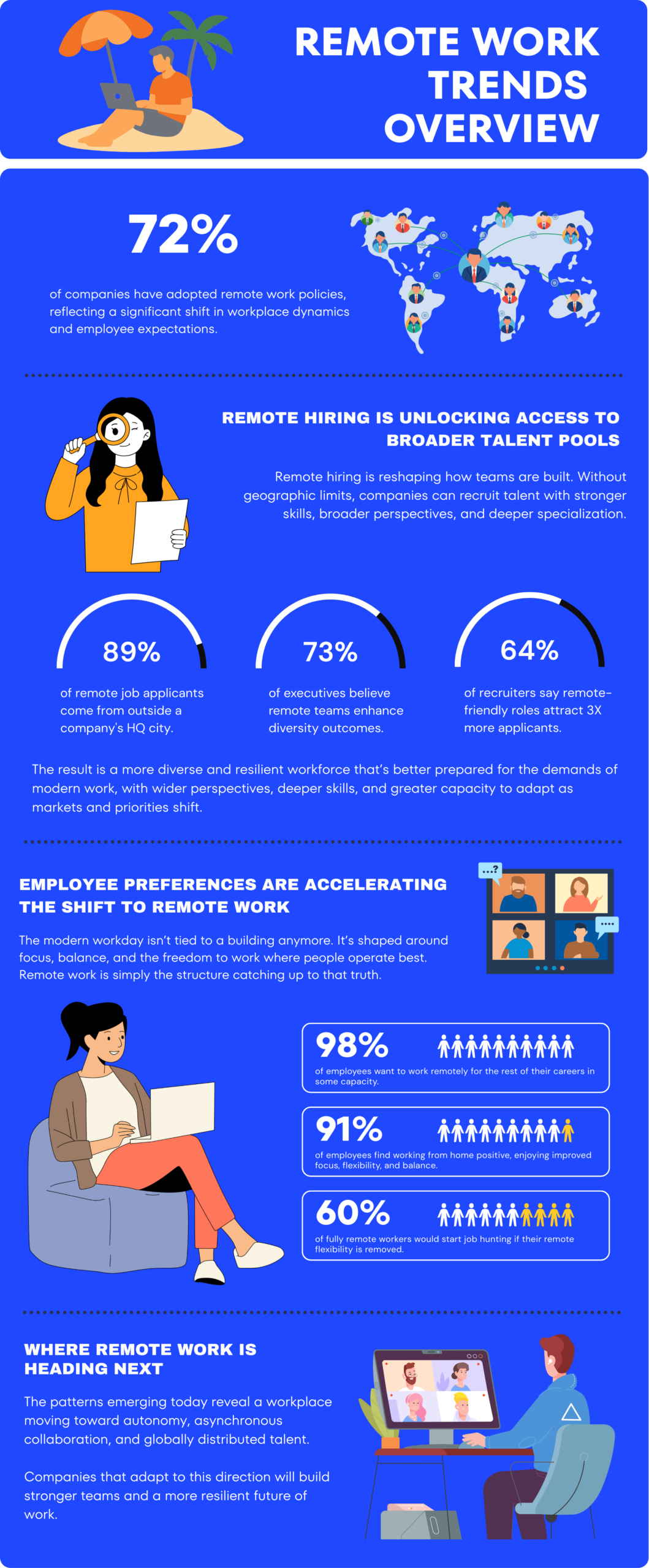
Embed this infographic
Copy and paste this HTML onto your site