
Most “best B2B SEO agency” lists are built around the wrong signal.
They compare agencies by visibility, traffic claims, service menus, or how polished the homepage looks. That can be useful, but it doesn’t tell you whether an agency can help turn organic search into demos, sales conversations, trials, and qualified pipeline.
For B2B companies, especially SaaS, tech, cybersecurity, manufacturing, and other high-consideration markets, SEO has to do more than increase traffic.
The right pages need to rank. The right buyers need to find them. The content has to match how people actually compare solutions. And the authority behind those pages has to be strong enough to compete.
A B2B SEO agency that only talks about keyword rankings may still be useful. But if they can’t explain which pages deserve investment, how those pages support revenue, and where content, authority, technical SEO, and AI search visibility fit together, you’re probably buying activity instead of strategy.
We kept this list short on purpose. Instead of naming every agency with a B2B SEO service page, we chose five agencies that represent different buyer needs: authority building, premium link acquisition, SaaS revenue SEO, content-led pipeline growth, and SaaS-focused AI visibility.
TL;DR: Best B2B SEO Agencies by Use Case
If you’re comparing B2B SEO agencies, start with the problem you need solved. Some agencies are better for authority and link building. Others are stronger for SaaS content, AI-search visibility, or broader revenue-focused SEO.
| Agency | Best for | Choose them if | Weaker fit if |
|---|---|---|---|
| Growth Partners Media | Authority-led SEO and strategic link building | You have commercial pages that need stronger authority, better links, and clearer page-level prioritization | You want the cheapest possible links or broad SEO execution without a strong authority focus |
| uSERP | Premium link building and enterprise SEO | You’re a larger SaaS, tech, or B2B company competing in a crowded category | You’re a smaller team with a limited budget or need a more flexible boutique campaign |
| Skale | SaaS SEO tied to revenue | You want SEO connected to SQLs, pipeline, and recurring revenue, not just traffic | You only need tactical link building or basic blog production |
| RevenueZen | B2B SaaS content and GEO | You need content strategy, SME-led writing, and GEO connected to organic-sourced pipeline | Your main bottleneck is manual link acquisition or technical SEO |
| SimpleTiger | SaaS SEO and AI search visibility | You need SaaS-focused SEO, content, and visibility across Google and AI search platforms | You need deep technical SEO or a narrow authority-building campaign |
How We Selected These B2B SEO Agencies
We built this list around buyer fit, not just brand size or broad SEO visibility.
A useful B2B SEO agency should be able to explain how its work connects to commercial outcomes.
That might mean improving rankings for comparison pages, building authority to product-led pages, fixing technical issues that block important content from being indexed, or creating content that helps buyers move from research to a sales conversation.
We looked at each agency based on B2B relevance, service focus, public positioning, proof signals, and best-fit use case.
A technical SEO agency might be the right choice for a complex enterprise website, but a poor fit for a SaaS company that already has clean foundations and mainly needs authority. A content-led agency might be excellent for building topical depth, but less useful if the real issue is that commercial pages are stuck on page two with no links behind them.
So instead of treating every agency as interchangeable, we’ve separated them by the problem they seem best equipped to solve.
1. Growth Partners Media: Best for Authority-led SEO and Strategic Link Building
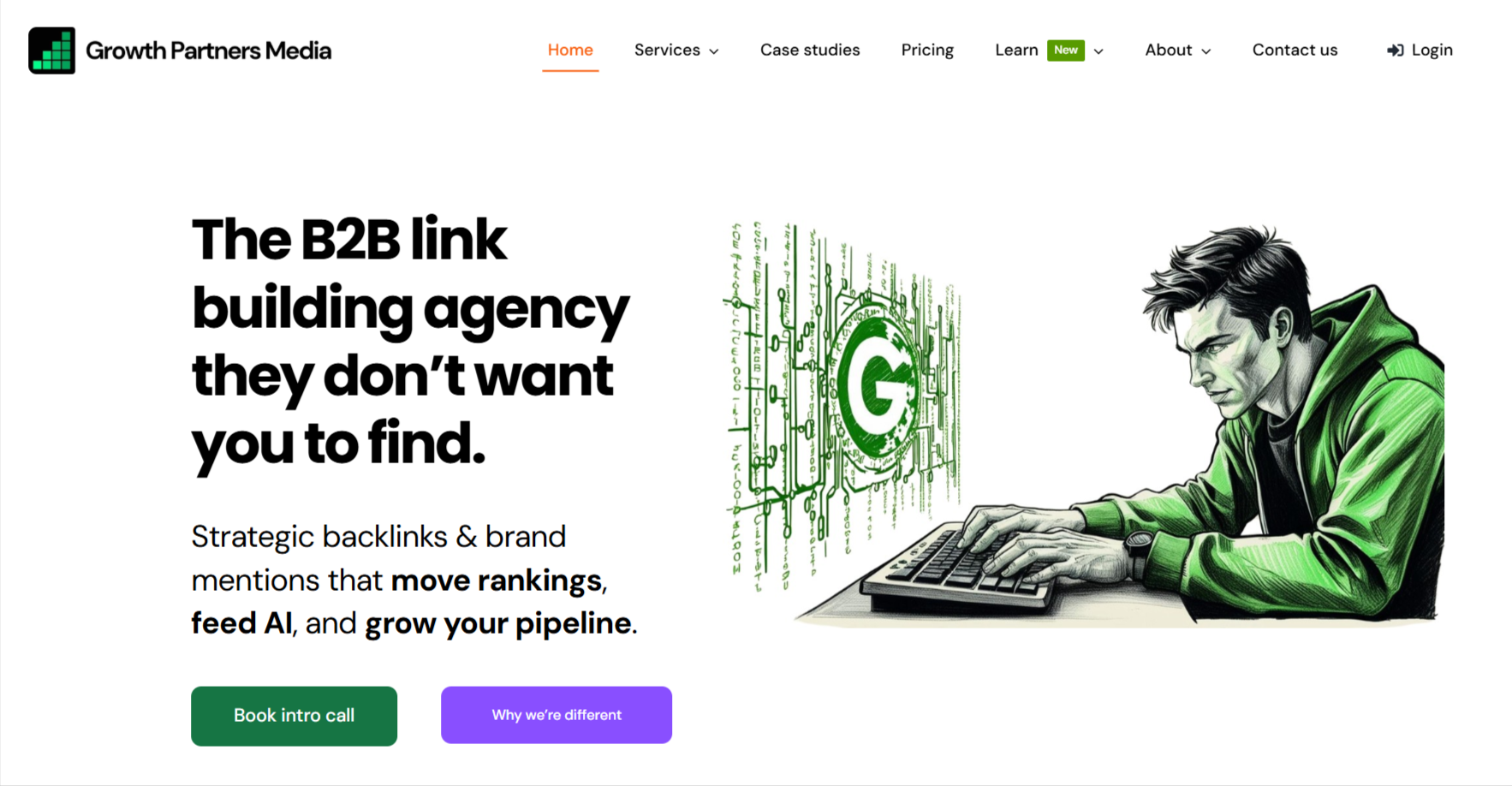
Growth Partners Media is a strong fit for B2B companies that already have valuable commercial pages, but need more authority behind them.
That usually means SaaS, cybersecurity, MSP, manufacturing, logistics, and technical B2B companies with pages that can influence pipeline: comparison pages, alternative pages, service pages, product pages, and bottom-of-funnel content. If those pages are sitting in positions 4 to 30, more blog content probably isn’t the first fix. They need better authority, better link context, and a clearer plan for which pages are worth pushing.
A lot of link building still works like a bulk order. Pick a DR range, choose a number of links, wait for the report. It looks neat, but it often ignores the only question that matters: will these links help the pages that can actually bring in buyers?
GPM approaches the work at page level. Before building links, we look at which URLs are closest to ranking, which ones support commercial intent, what the existing backlink profile looks like, and how aggressive the anchor strategy can safely be. A homepage link might make sense in one campaign.
In another, the better move might be supporting a comparison page, an alternative page, or a service page that already has the right intent but not enough authority.
The quality check also goes beyond Domain Rating. DR can be useful as a first filter, but it’s not a strategy. We look at topical relevance, real organic traffic, editorial quality, link context, and whether the page itself makes sense for the target URL.
A strong link on paper can still be a weak placement if the article is irrelevant or the anchor has been bolted into a weird sentence for SEO purposes. Plenty of buyers have paid for that lesson already.
GPM also makes sense for companies thinking about AI search visibility without wanting to chase every new acronym.
Our work combines editorial links with brand mentions across relevant communities and UGC platforms through Herd Links. Those mentions don’t replace proper authority links, but they can help strengthen brand association across the places buyers and AI systems increasingly reference during research.
Best fit:
B2B and SaaS companies that need strategic link building, commercial-page authority, and transparent reporting around what’s being built, where it points, and why it matters.
Weaker fit:
Companies looking for the cheapest possible links, generic traffic growth, or broad SEO execution without a strong focus on authority and buyer-stage pages.
2. uSERP: Best for Premium Link Building and Enterprise SEO
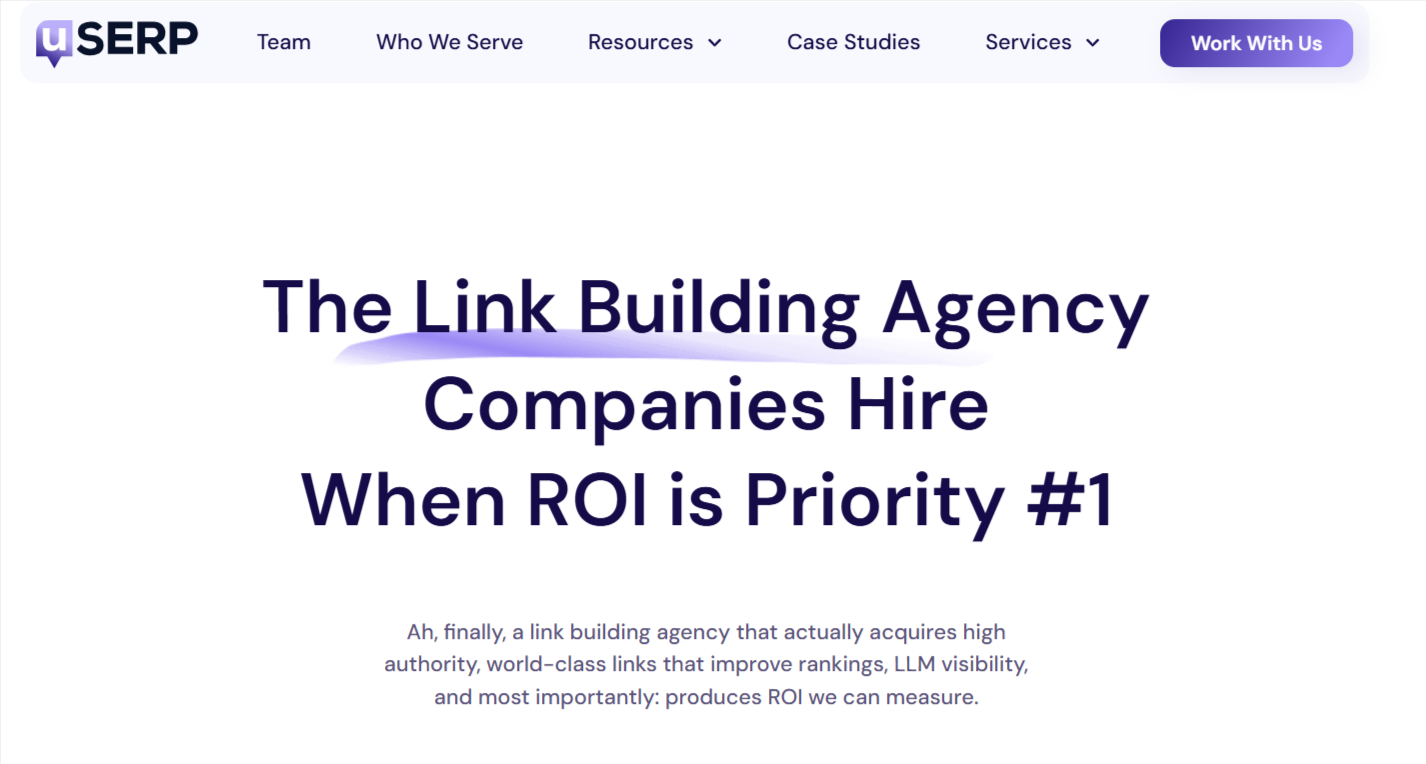
uSERP is a natural fit for B2B and SaaS companies that want high-authority link building tied to bigger SEO and revenue goals.
The agency positions itself around link building, AI visibility, ROI, and enterprise SEO, with a clear emphasis on outcomes rather than raw deliverable counts. Its enterprise SEO page frames success around market share, SQLs, pipeline, and revenue instead of “100 links” or “20 new articles.”
That makes uSERP relevant for companies in competitive categories where authority is difficult to build in-house. If you’re trying to compete in SaaS, fintech, cybersecurity, HR tech, or another crowded B2B market, you usually need links from sites that are hard to access through ordinary outreach. uSERP’s public positioning leans heavily into premium link acquisition, enterprise SEO, and AI search visibility.
The fit is strongest for companies with the budget and internal maturity to support a larger SEO program. If your team needs a low-cost batch of guest posts, uSERP probably isn’t the natural choice. But if the goal is building authority in a serious B2B category, especially where AI visibility and enterprise search performance matter, it belongs on the shortlist.
The main difference from GPM is fit and operating style. GPM is stronger for companies that want hands-on page-level authority planning, careful link context, and hybrid campaigns that combine editorial links with brand mentions and community visibility. uSERP feels better suited to larger teams that want a premium link-building and enterprise SEO partner with broader market visibility.
Best fit:
Enterprise B2B, SaaS, and tech companies that need premium link acquisition, AI visibility, and authority growth tied to revenue outcomes.
Weaker fit:
Smaller teams looking for lower-cost link building, highly flexible campaign formats, or a more hands-on boutique authority strategy.
3. Skale: Best for SaaS SEO Tied to Revenue
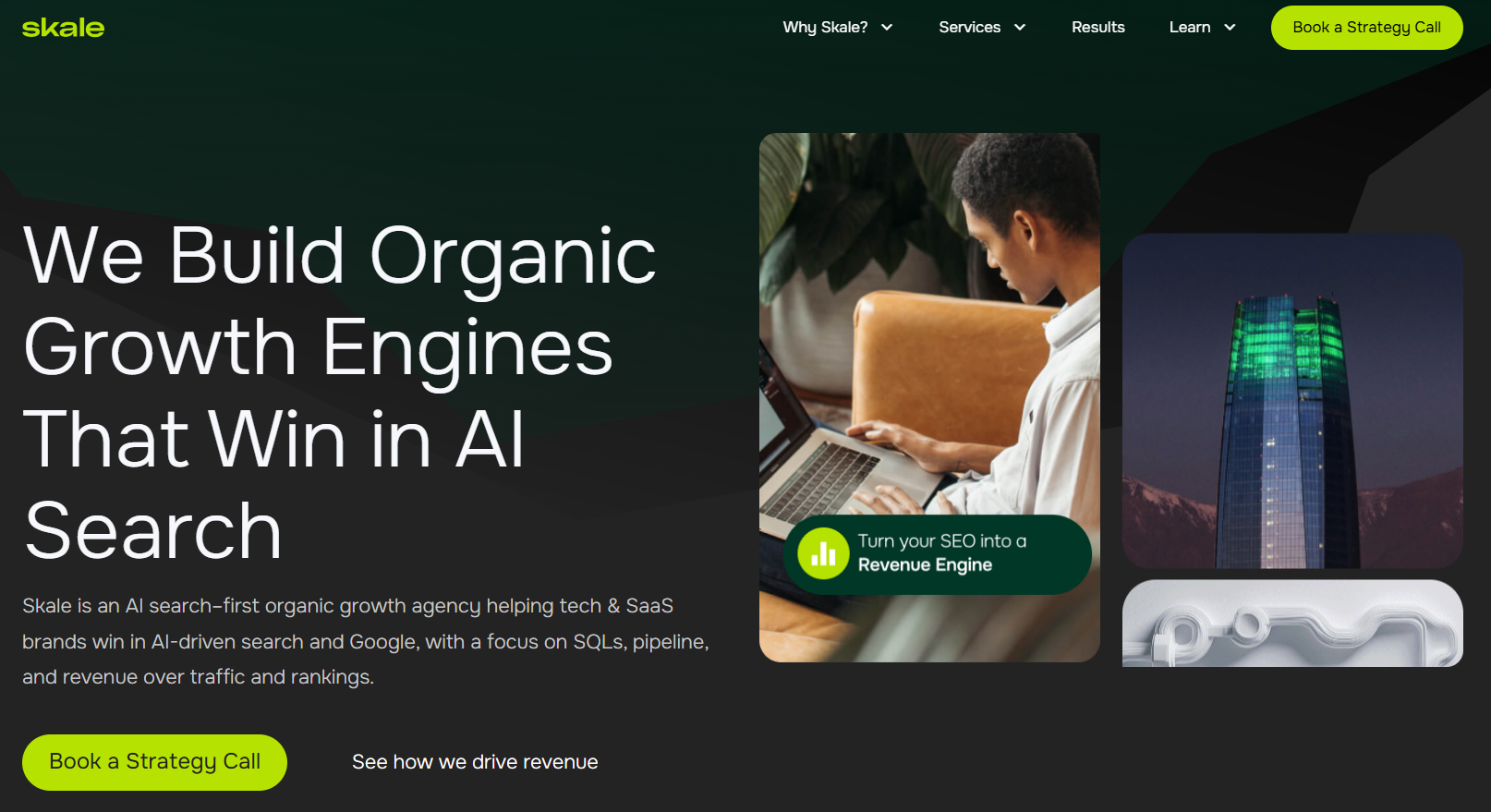
Skale doesn’t lead with rankings. At least, that’s not how it frames the work. The agency’s pitch is built around SQLs, pipeline, and revenue, treating traffic and keyword position as the byproduct, not the goal.
For a SaaS company that already has an internal team obsessing over rankings, that shift in framing is either exactly what’s needed or a distinction without a difference, depending on how disciplined the reporting actually is.
The work spans strategy, content, authority, and measurement, which only really pays off when a company is ready to hold the agency to revenue numbers instead of vanity metrics.
That requires some internal maturity: someone on the buyer’s side has to be able to connect a ranking improvement to a pipeline number, or the “revenue-first” positioning is just marketing language layered over standard SEO deliverables.
This isn’t the pick for a company that wants a fast batch of backlinks or a content calendar filled on autopilot. Skale is built for teams that already think of organic search as a revenue channel and want a partner who reports in the same terms.
Best fit:
SaaS and tech companies that want SEO tied to SQLs, pipeline, and recurring revenue, with reporting to match.
Weaker fit:
Companies that mainly want tactical link building, low-cost content production, or don’t yet have the internal attribution setup to hold the agency to revenue claims.
4. RevenueZen: Best for B2B SaaS Content and GEO Tied to Pipeline
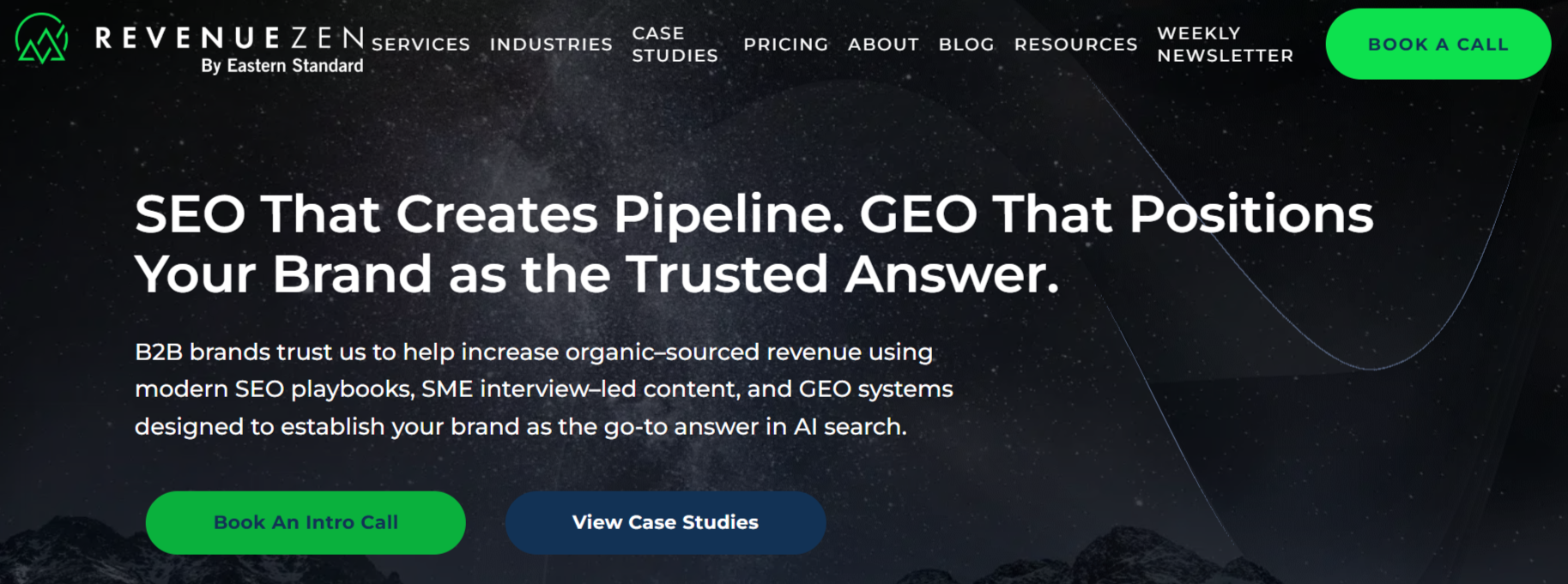
Most content agencies will tell you they write for humans and rank for Google. RevenueZen adds a third audience: the AI tools buyers now ask before they ever talk to sales.
The agency combines SEO, SME interview-led content, and GEO for B2B SaaS companies that want to show up as trusted answers across search and AI discovery. That makes it a useful option when the issue is not just “we need more articles,” but “our content doesn’t reflect what buyers actually care about.”
The SME-led part matters more than it sounds like it should. A lot of B2B content gets written by generalists doing keyword research and paraphrasing the top five results. RevenueZen’s model leans on interviews with people who know the subject, then builds content around that expertise. That’s slower than a content mill, but it’s also harder to copy with an AI tool and one afternoon.
The main fit here is service alignment, not a single headline result. RevenueZen makes sense for teams that need SEO, content, and GEO working together, especially when their current content program feels too generic, too disconnected from sales conversations, or too focused on publishing volume.
RevenueZen is a weaker match if the real bottleneck is specialist link acquisition. A site with strong, well-positioned commercial pages that can’t crack the top few spots may need better links, better link context, or a clearer authority plan before it needs more content. RevenueZen’s strongest fit is content depth, SME-led production, GEO, and organic strategy tied to pipeline.
Best fit:
B2B SaaS companies that need SME-driven content and GEO strategy connected to organic pipeline, not just publishing volume.
Weaker fit:
Companies whose real constraint is specialist link building, technical SEO, or page-level authority rather than content quality.
5. SimpleTiger: Best for SaaS SEO and AI Search Visibility
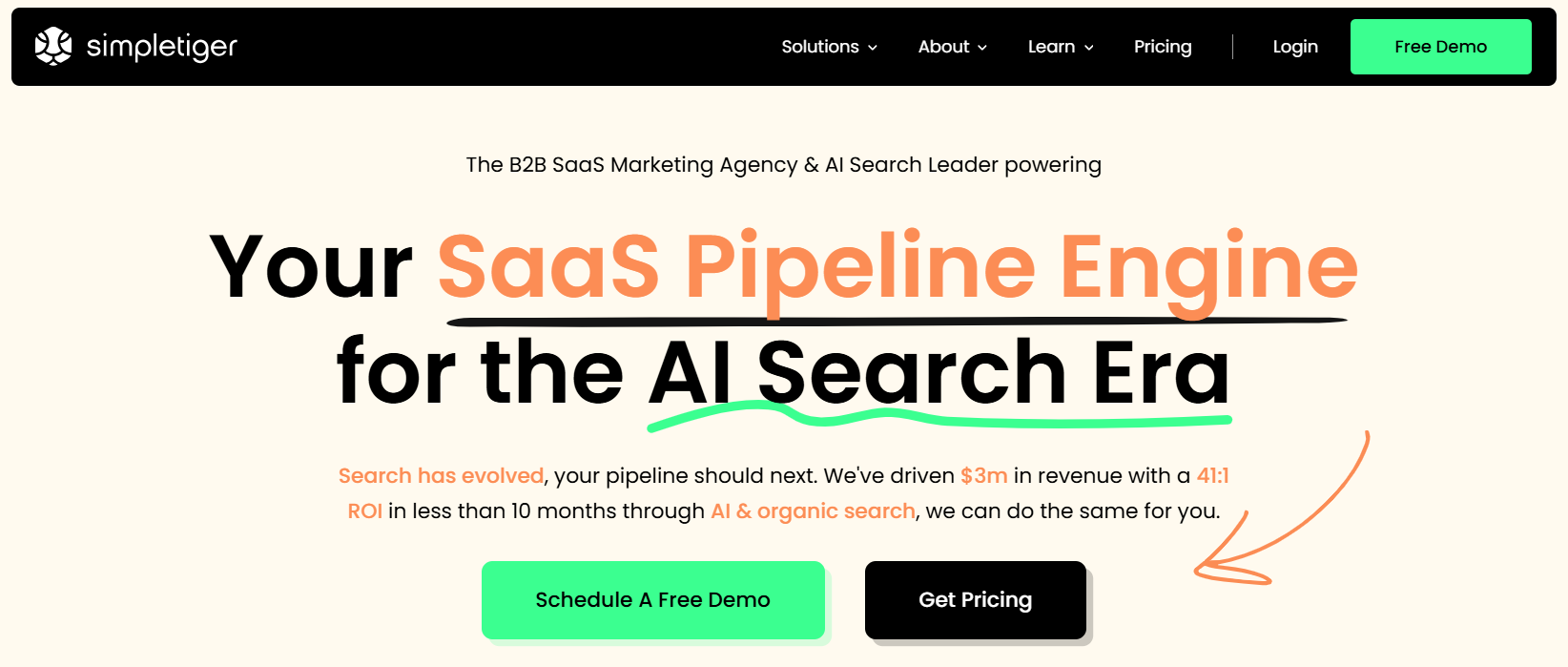
SimpleTiger is one of the most clearly SaaS-focused agencies on this list. Its site is built around SaaS and AI software companies, with services that bring traditional search, AI search, content, technical optimization, authority link building, digital PR, and community engagement into one broader growth program.
For a SaaS marketing lead who doesn’t want to stitch together separate vendors for content, links, and AI-search visibility, that setup is useful. SimpleTiger’s pitch is not just “we’ll help you rank.” It’s closer to a joined-up visibility program across Google, AI Overviews, ChatGPT, Perplexity, Claude, Gemini, and the supporting channels that help a software brand get found and chosen.
SimpleTiger is less compelling when the need is narrow. If the real problem is crawlability, a specialist technical SEO agency may make more sense.
If the only goal is standalone manual link acquisition, a dedicated link-building partner may be cleaner. SimpleTiger’s value is in the combined SaaS search program, not one isolated deliverable.
Best fit:
SaaS and AI software companies that want SEO, content, authority building, and AI-search visibility handled together by a SaaS-focused team.
Weaker fit:
Companies that need one narrow deliverable, such as deep technical SEO, standalone manual link acquisition, or pure pipeline attribution reporting.
Match the Agency to your Actual Bottleneck
The right agency depends on where organic growth is getting stuck.
If your commercial pages already exist but they’re not ranking high enough to bring in qualified buyers, you probably have an authority problem.
Growth Partners Media or uSERP makes more sense in that situation than a content-heavy agency. You need stronger links, better page-level authority, and a clear plan for which URLs are worth pushing.
If your site has weak bottom-of-funnel content, thin comparison pages, or no useful content for buyers who are actively evaluating options, look at Skale, RevenueZen, or SimpleTiger. Those agencies are better suited to SaaS teams that need content strategy, AI-search visibility, and SEO execution tied to revenue.
If your site has messy technical foundations, none of the agencies on this list may be the first call. You may need a technical SEO specialist before investing heavily in content or authority. Hiring the wrong type of agency can make a sensible SEO investment look like a bad one.
| If this is the constraint | What it usually means | What to do first |
|---|---|---|
| Commercial pages rank in positions 4 to 30 but don’t break into top spots | The page may already match intent, but it lacks authority or stronger link context | Prioritize page-level authority and strategic link building |
| You have strong content but weak authority | Publishing more may not solve the ranking ceiling | Build better links to the pages that can influence pipeline |
| You have no useful comparison, alternative, or use-case pages | Buyers don’t have enough decision-stage content to find or evaluate you | Fix the content strategy before buying links |
| Organic traffic is growing but demos or qualified leads are not | The site may be ranking for informational terms that don’t match buying intent | Rebalance the strategy toward buyer-stage keywords and commercial pages |
| AI-search visibility is weak | The brand may not be clearly associated with its category across trusted third-party sources | Strengthen entity signals, brand mentions, and category-relevant content |
| Important pages are not being indexed or understood properly | The issue may be crawlability, rendering, internal linking, or site architecture | Talk to a technical SEO specialist before investing heavily in content or links |
The common mistake is hiring around a service category before diagnosing the real constraint.
A B2B SaaS company stuck on page two for high-intent terms probably doesn’t need another 40 blog posts. A company with no useful commercial content probably shouldn’t start by buying links. And a company with messy technical foundations may need cleanup before content or authority work has a fair chance.
A good agency should be able to explain what they would prioritize first, what they would leave alone, and what they would not spend your budget on yet.
Plenty of agencies can sell activity. Fewer can say, “This page isn’t ready,” or “That keyword is not realistic yet,” or “You’ll get more from fixing the offer page before we build links to it.”
That judgment is usually where the value is.
Final Thoughts
Most B2B SEO problems are not solved by buying more of everything.
More content can help. So can links, technical SEO, digital PR, and AI-search work.
But the order matters. A company with thin comparison pages should not start by buying links. A company with strong bottom-of-funnel pages stuck on page two probably does not need another batch of blog posts. A company with crawlability issues may need technical cleanup before content or authority work gets a fair test.
The right partner should be able to identify the constraint before selling the solution.
Good B2B SEO should make your most important pages easier to find, easier to trust, and easier to choose. Traffic is useful only when it brings the right buyers closer to a sales conversation.

- Best Blogger Outreach Services in the UK [2026] - August 13, 2026
- Best Reddit Brand Mention Services (Honest Review) - August 5, 2026
- Best B2B SEO Agencies for Pipeline Growth [2026] - July 14, 2026
Get more traffic, get more conversions – all without paying for ads 

Let’s chat to see if we can help you multiply your SEO revenue.
Get more traffic, get more conversions – all without paying for ads
Let’s chat to see if we can help you multiply your SEO revenue.
