
Organic SEO hasn’t gotten harder. It’s gotten smarter.
And that’s the problem.
Many companies are still operating like it’s 2015. Publish some “valuable” content. Pick up a few backlinks. Run the occasional audit. Then hope for steady growth.
But modern search doesn’t reward hope.
Today’s visibility is shaped across two parallel systems:
- Traditional Google rankings
- AI-powered search interfaces
Both reward depth, structured expertise, and genuine authority. Both penalise shallow execution.
If your strategy isn’t designed to perform across both, performance gaps start forming quietly. Traffic plateaus. Rankings fluctuate. Competitors compound authority while you maintain it.
The nuance has increased. The margin for error has shrunk.
Sustainable organic growth now requires technical precision, topical clarity, and authority building that holds up across algorithm updates and AI-driven discovery.
The agencies listed below are evaluated against that reality, not outdated SEO playbooks.
Understanding Organic SEO Companies: What True Expertise Looks Like Today
Most companies call themselves “full-service SEO.” But when you peel back the layers, they’re offering watered-down versions of the same things:
Blog writing, backlink outreach, basic audits, and templated reports. Nothing wrong with the fundamentals… except when that’s all there is.
Real SEO companies offer much more strategic depth and expertise built through experience.
An organic SEO company should function like a strategic partner, not a content vendor.
Their role is to help you gain and keep visibility across complex search surfaces. So not just Google, but the new generation of AI-driven search tools that decide what gets surfaced based on trust, authority, and entity relationships.
Here’s what an expert-led organic SEO team actually covers:
- Technical SEO: Crawlability, indexing logic, structured data, internal linking architecture, canonicalisation, and site performance. These are foundational elements that influence discoverability long before content is evaluated.
- Strategic Keyword & Intent Mapping: Search volume alone is insufficient. Effective SEO requires intent modelling, topic clustering, and alignment with measurable commercial outcomes.
- Content Architecture: Authority is not built page-by-page. It is structured through hierarchy. What gets published, how pages interconnect, and how topical depth is layered all influence long-term ranking stability.
- Authority & Link Acquisition: Links should reinforce expertise and relevance. Ethical, editorial placements aligned to industry context matter more than isolated domain metrics or link volume.
- On-Page Precision: Structural clarity, semantic optimisation, internal linking improvements, and content refinement often unlock ranking gains without requiring additional content production.
- AI Search Readiness: As AI interfaces increasingly influence discovery, brands must build topical depth, structured information, and entity clarity to remain visible even when traditional click paths shift.
What differentiates strategic operators from execution-only providers is perspective.
Execution shops respond to algorithm changes. Strategic partners design infrastructure resilient enough to withstand them.
They treat technical performance, authority building, and content development as components of a unified visibility system, not disconnected tasks.
If an agency cannot articulate how these components integrate, they are likely delivering activity rather than strategy.
Evaluating Organic SEO Solutions: Beyond Packages to Strategic Partnership
If you’re comparing SEO proposals and they all sound the same, you’re not wrong.
Most “packages” are padded checklists. Monthly blog posts. A set number of backlinks. Keyword tracking. Technical audits. It looks complete on paper.
In practice, it’s often reactive, narrowly scoped, and disconnected from real business priorities (bottom line growth).
The right question isn’t “What’s included?” It’s “What’s the thinking behind it?”
That’s where the separation happens. Generic SEO providers sell outputs. Real partners build strategies that evolve with your market, your goals, and the way people search the web.
What to look for in a strategic SEO partner
- Transparency: Watch how they explain tradeoffs. Do they tell you what won’t move the needle? Are they clear on what takes time and why?
- Customization: There’s no such thing as best practices that apply to every funnel, product tier, or business model. Strategy should fit your specific customer buying cycle.
- Consulting depth: Great SEO experts act like analysts. They look at your site, your industry, your competitive SERPs and they articulate what matters, what doesn’t, and what to do next with clarity.
- Holistic SEO: They don’t treat content, technical, and authority-building as separate functions. They know how each lever supports visibility across both algorithmic and AI-curated search.
If your provider can’t explain how their work connects to business impact, they’re selling activity, not value. The best organic SEO companies are defined by their discernment. A strategy could be executed perfectly, but if it’s the wrong strategy, it still won’t work.
Best Global Organic SEO Providers for The English Search Market
Hiring the wrong SEO agency doesn’t just waste money. It slows growth.
Organic search compounds over time. If the strategy is weak, competitors move ahead while you’re investing in work that doesn’t shift rankings or revenue.
The best SEO providers aren’t content factories or reporting machines. They think strategically, diagnose problems properly, and connect technical execution to commercial outcomes.
Below are agencies that operate at that level, and what makes each one strong.
1. Growth Partners Media: Best for AI-Era B2B authority growth
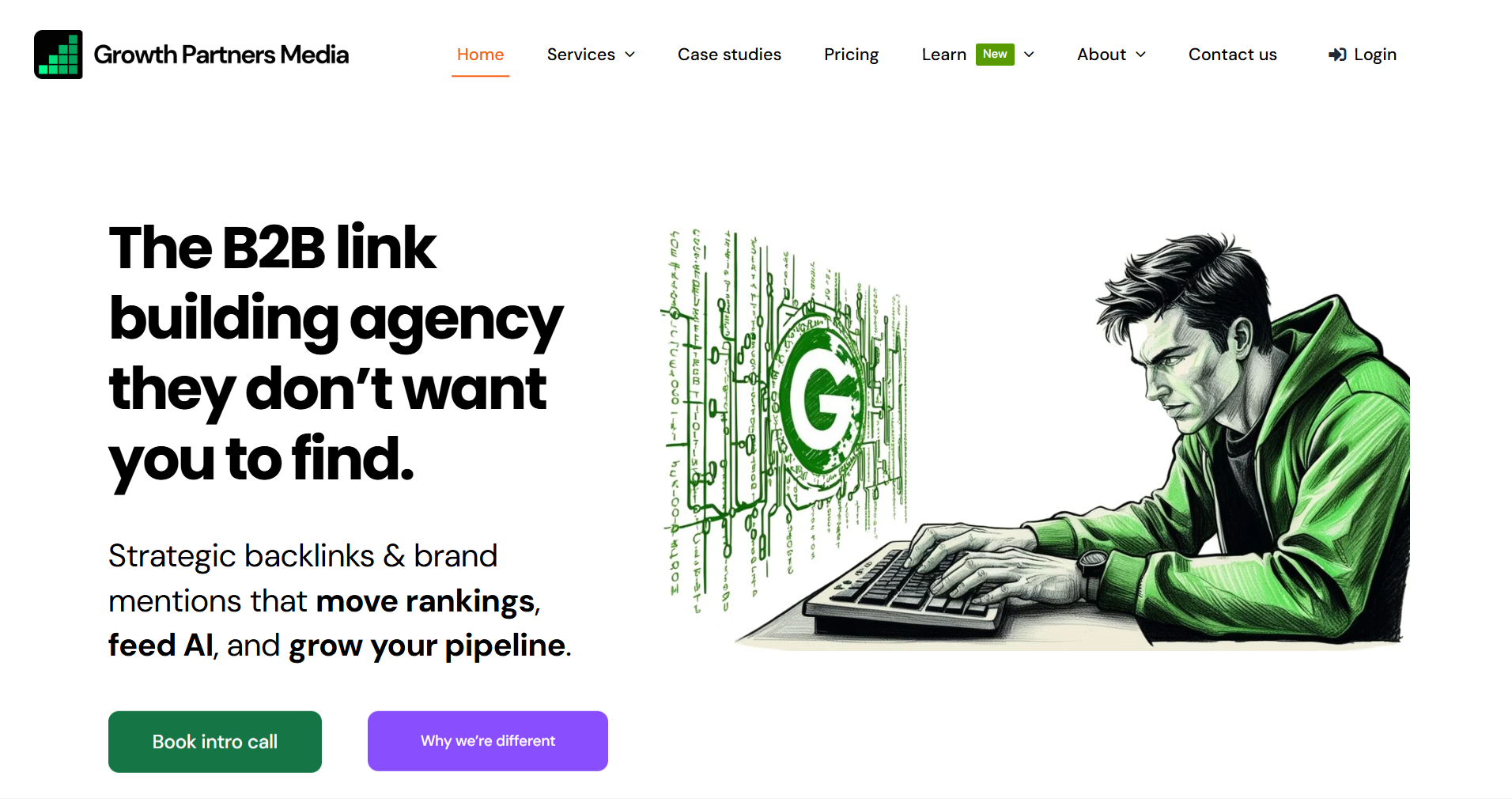
Growth Partners Media is a performance-focused organic SEO agency that helps B2B companies win in competitive markets.
Instead of starting with “we’ll publish X blogs per month,” they start by diagnosing why a site isn’t ranking. That means looking at:
- The quality and relevance of existing backlinks
- Whether key revenue pages have enough authority behind them
- Gaps compared to competitors
- Whether the brand is being cited or mentioned in trusted industry sources
Only after that do they build a plan.
Their campaigns focus on strengthening the pages that actually generate leads and revenue. That typically includes securing editorial backlinks on relevant websites, placing contextual niche edits (or guest post links), improving internal structure, and building brand mentions that increase trust signals across both Google and AI-driven search tools.
Rather than spreading effort evenly across an entire site, authority is directed toward high-intent product and comparison pages where ranking gains translate into real commercial impact.
What differentiates Growth Partners Media is its emphasis on durable authority. The strategy is designed to hold up through algorithm updates and remain visible across emerging AI search interfaces, not just traditional rankings.
Best fit:
B2B SaaS, manufacturing, logistics, and technical service companies competing in difficult English-language markets.
Not ideal for:
Early-stage startups, purely local SEO campaigns, or businesses looking for cheap, high-volume SEO packages.
2. Mike Khorev: Technical SEO & AI-focused consulting
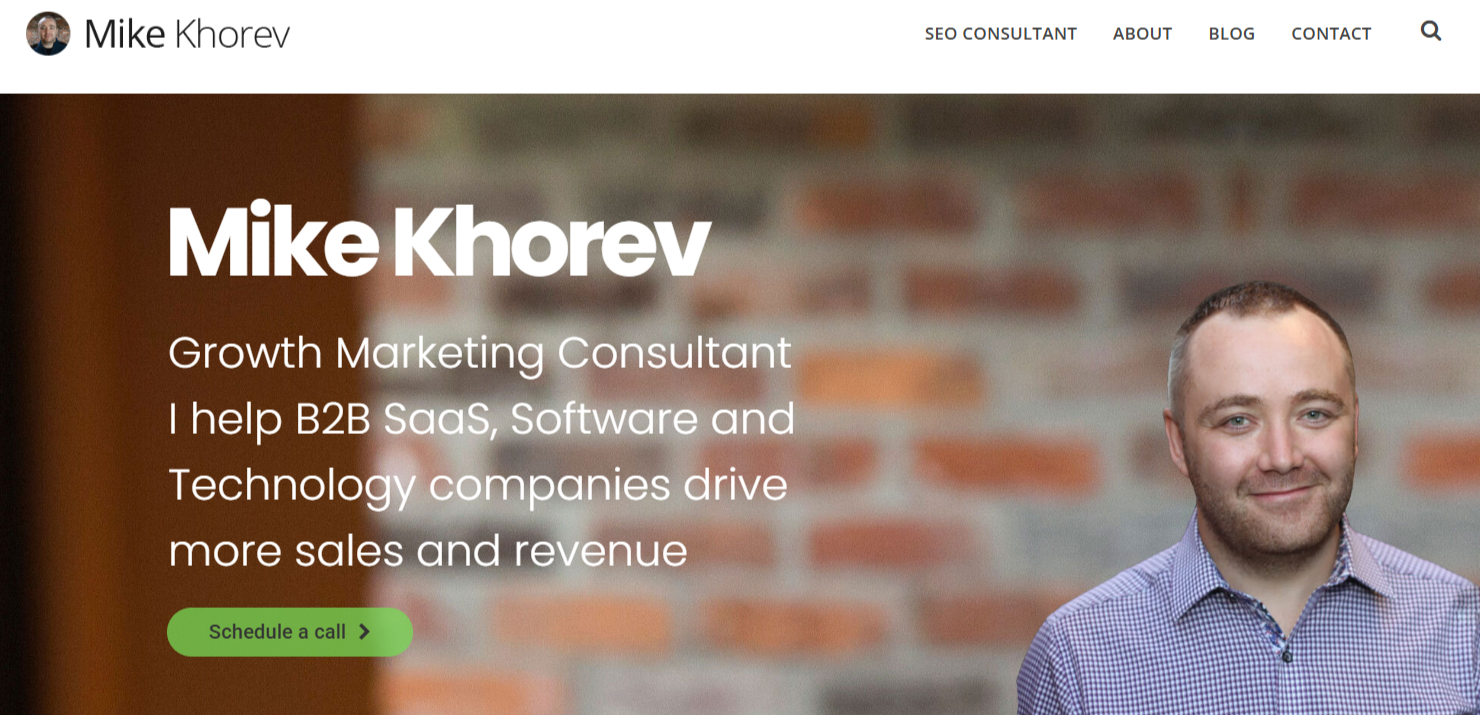
Mike Khorev runs a consultant-led SEO practice focused on technical performance and adapting websites for modern search behavior.
Rather than operating as a large agency with layered account management, engagements are led directly by senior expertise. This makes the work more hands-on and tailored, particularly for companies that need clear technical direction rather than ongoing content production at scale.
His work typically centers on improving site structure, crawlability, indexing, and structured data implementation. There is also a strong emphasis on preparing websites for AI-influenced search environments, ensuring content is clear, well-organized, and technically accessible to both traditional search engines and emerging generative systems.
Projects often include detailed technical audits, schema implementation, site architecture improvements, and strategic content refinements designed to improve visibility without unnecessary volume.
The focus is precision rather than scale.
Best fit:
Companies seeking senior-level technical SEO consulting, detailed audits, and tailored strategies aligned with both Google rankings and AI-driven search interfaces.
Not ideal for:
Businesses looking for large-scale content production, aggressive link acquisition campaigns, or full-service marketing management.
3. Nine Peaks Media: Technical & content-led SEO
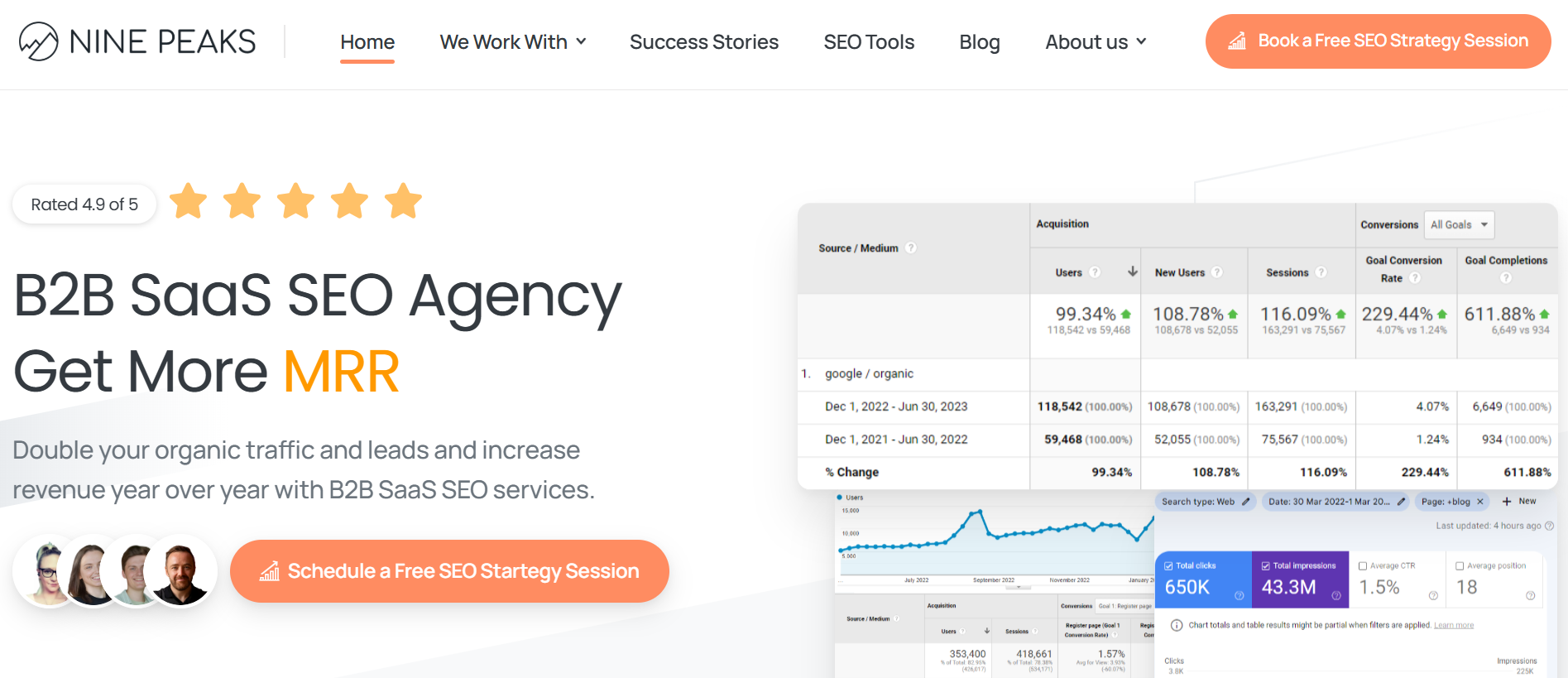
Nine Peaks Media is a boutique SEO agency that combines technical optimisation with structured content improvement.
Rather than focusing purely on link acquisition or content volume, the agency works across site architecture, structured data, and on-page refinement to strengthen how search engines interpret and rank a website. Engagements often include improving internal linking, cleaning up indexing issues, implementing schema, and aligning content more clearly with search intent.
There is also attention given to how content performs in AI-influenced search environments. That means ensuring pages are structured clearly, answer questions directly, and provide enough depth to be surfaced in generative search experiences.
Competitive analysis and ongoing performance tracking are used to identify gaps and measure progress over time, particularly as search behavior shifts.
The emphasis is on balance. Strengthening technical foundations while improving content clarity and topical relevance.
Best fit:
Brands seeking a measured SEO strategy that integrates technical improvements with content optimisation, particularly those looking to improve performance without dramatically increasing production volume.
Not ideal for:
Companies seeking aggressive link-building campaigns, high-volume content marketing at scale, or full-service digital marketing management.
4. Helium SEO: Best for data-driven, tech-forward SEO execution
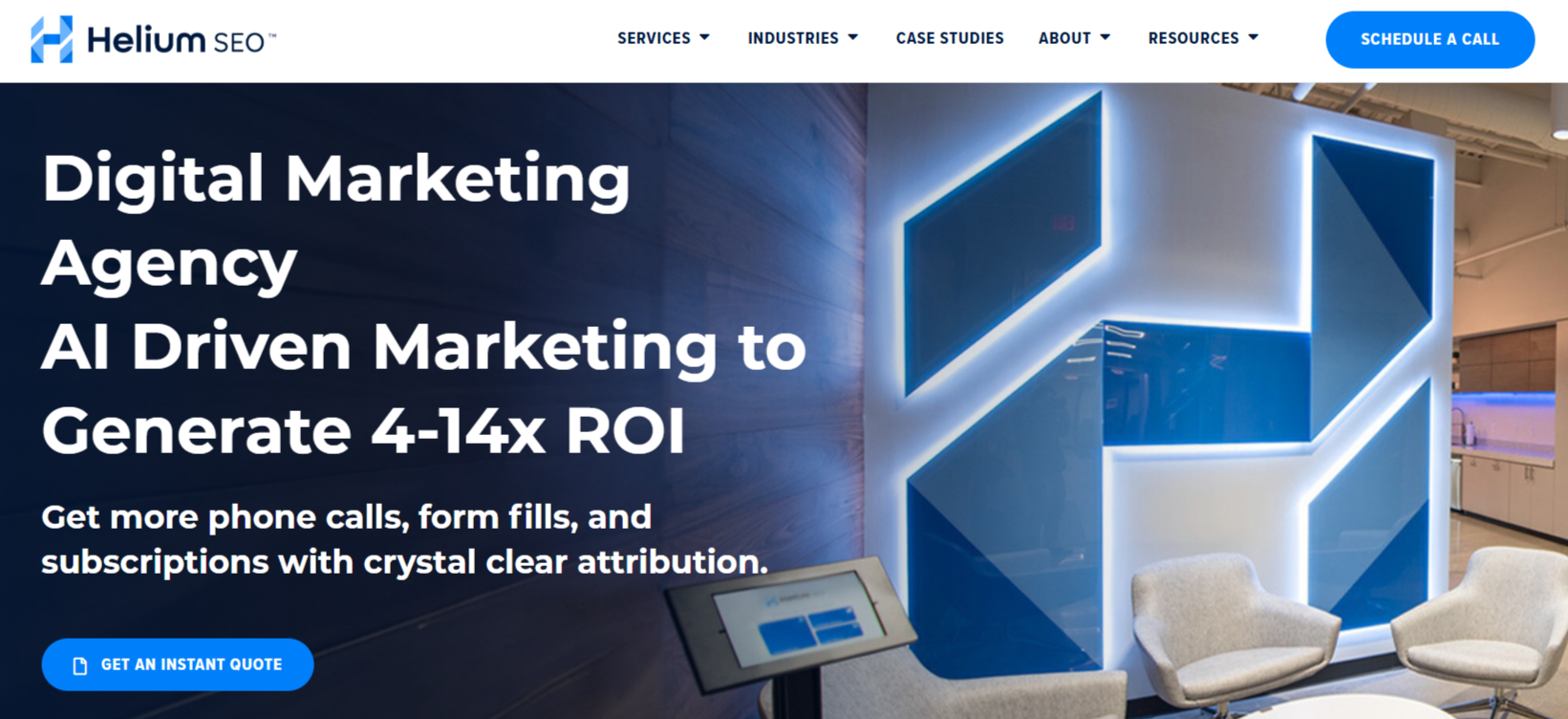
Helium SEO is a US-based digital marketing agency that combines traditional SEO with data analysis, automation, and AI-informed tools to support search performance and revenue outcomes. The team offers a mix of technical SEO, competitive analysis, structured data work, on-page optimisation, and performance tracking alongside broader digital marketing support.
Rather than positioning itself purely as a creative content agency or a heavy editorial outreach shop, Helium leans into a technology-centric model. Its services blend technical audit work, structured data implementation, internal linking improvement, and AI-assisted reporting with broader campaign components such as paid search and conversion optimisation where needed.
Clients often engage Helium to resolve technical performance barriers, uncover quick-win SEO opportunities, and scale keyword coverage in a structured, data-informed way. The agency also prioritises clear measurement and attribution, providing clients with dashboards and analytics to understand how different SEO and marketing activities contribute to outcomes.
Best fit:
Organisations that prioritise technical precision, data-driven diagnosis, and structured performance analysis. Particularly those looking to blend SEO with broader digital marketing components or outcomes tracking.
Not ideal for:
Businesses seeking specialised authority-focused link acquisition, high-volume editorial campaigns, or purely content-driven SEO strategies.
5. Compuvate: Best for local and SMB-focused SEO
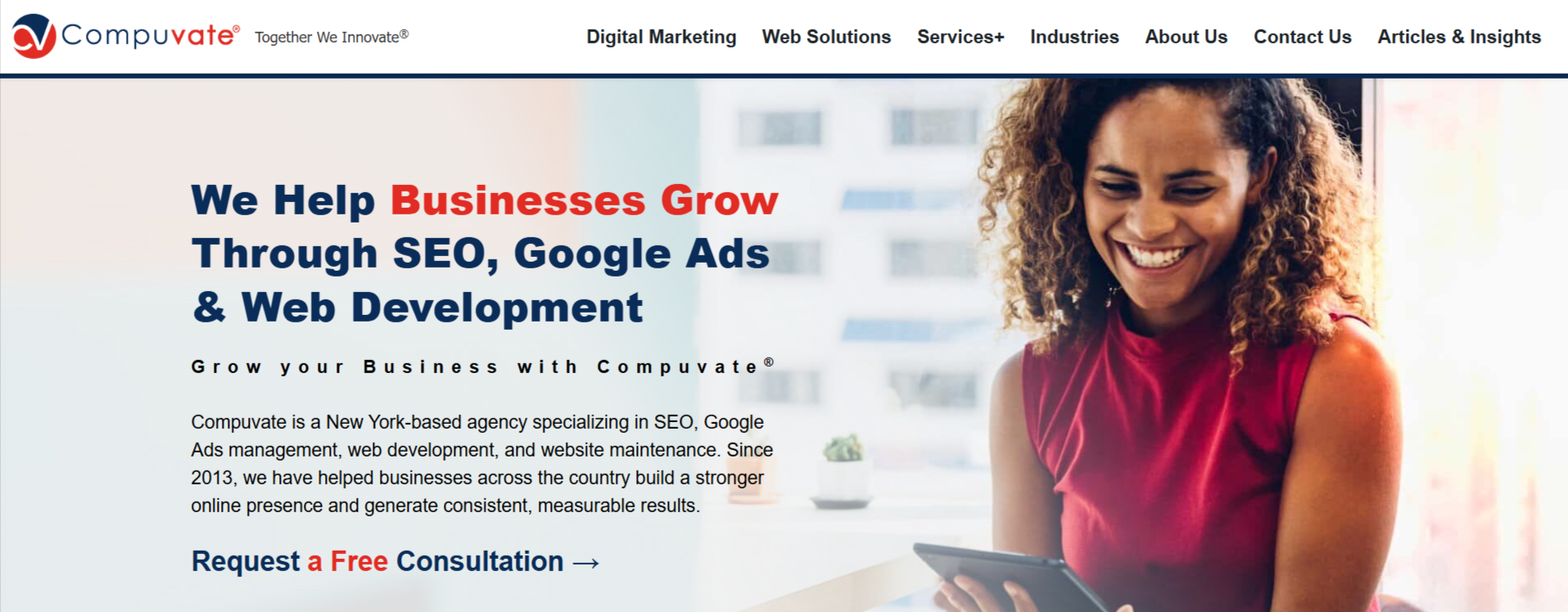
Compuvate is a general SEO provider that serves primarily brick-and-mortar businesses and small to mid-sized organisations. The agency emphasises foundational search optimisation work, including on-site keyword tagging, basic technical audits, and local listing and directory support.
Their approach centres on strengthening baseline visibility in local and regional search results. For businesses that depend on organic discoverability within specific geographic areas, like retail stores, professional services, or locally driven service providers. These fundamentals can help establish a clearer presence in search.
Compuvate’s services prioritise tried-and-true SEO practices over emerging AI-centric optimisation strategies or complex interlinking models. As a result, their work is often straightforward, structured, and accessible for teams with limited internal SEO expertise.
Best fit:
Brick-and-mortar businesses, local service providers, and resource-constrained teams focused on improving organic visibility within defined geographic markets.
Not ideal for:
Organizations competing in highly competitive English-language markets, businesses that require advanced AI-search readiness, or companies seeking authority-driven link building at scale.
6. Victorious: Best for process-driven, transparent SEO execution
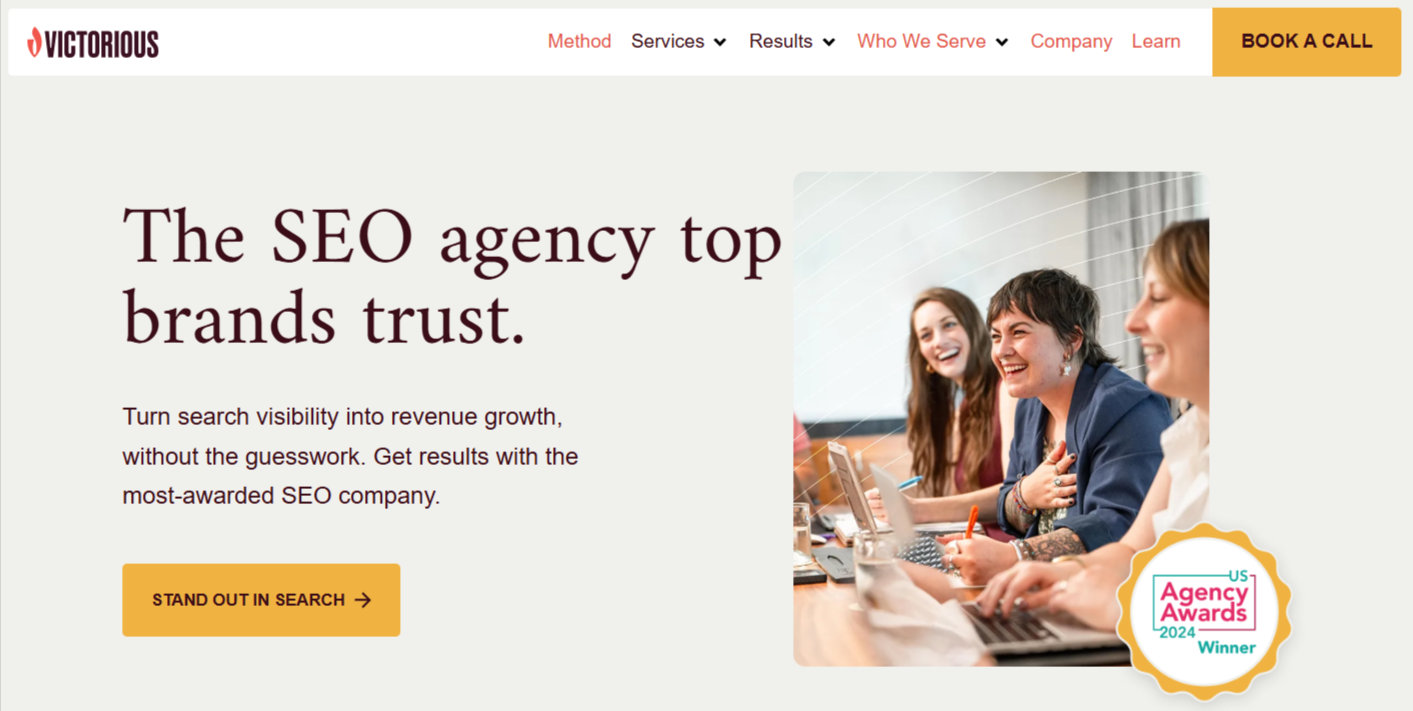
Victorious is a structured, process-led SEO provider focused on predictable organic search improvements. The agency emphasises clarity, documentation, and repeatability in its approach, making it appealing to teams that prioritise transparency and dependable delivery.
Campaigns typically centre on technical SEO, on-page optimisation, keyword strategy, and performance reporting. Victorious operates with clearly defined workflows and milestones, helping clients understand what’s happening at each stage and how outcomes are measured against expectations.
Rather than bespoke, tailor-built strategies for every client, the emphasis is on a well-documented methodology that can be applied consistently across engagements. This makes their work especially suitable for organisations seeking reliable execution and visibility into process.
Best fit:
Mid-market companies that value structured reporting, transparent workflows, and SEO improvements driven by established methodology.
Not ideal for:
Businesses seeking highly customised strategies, aggressive authority building at scale, or specialised AI-centric optimisation roadmaps.
7. Terakeet: Best for enterprise SEO & owned asset growth
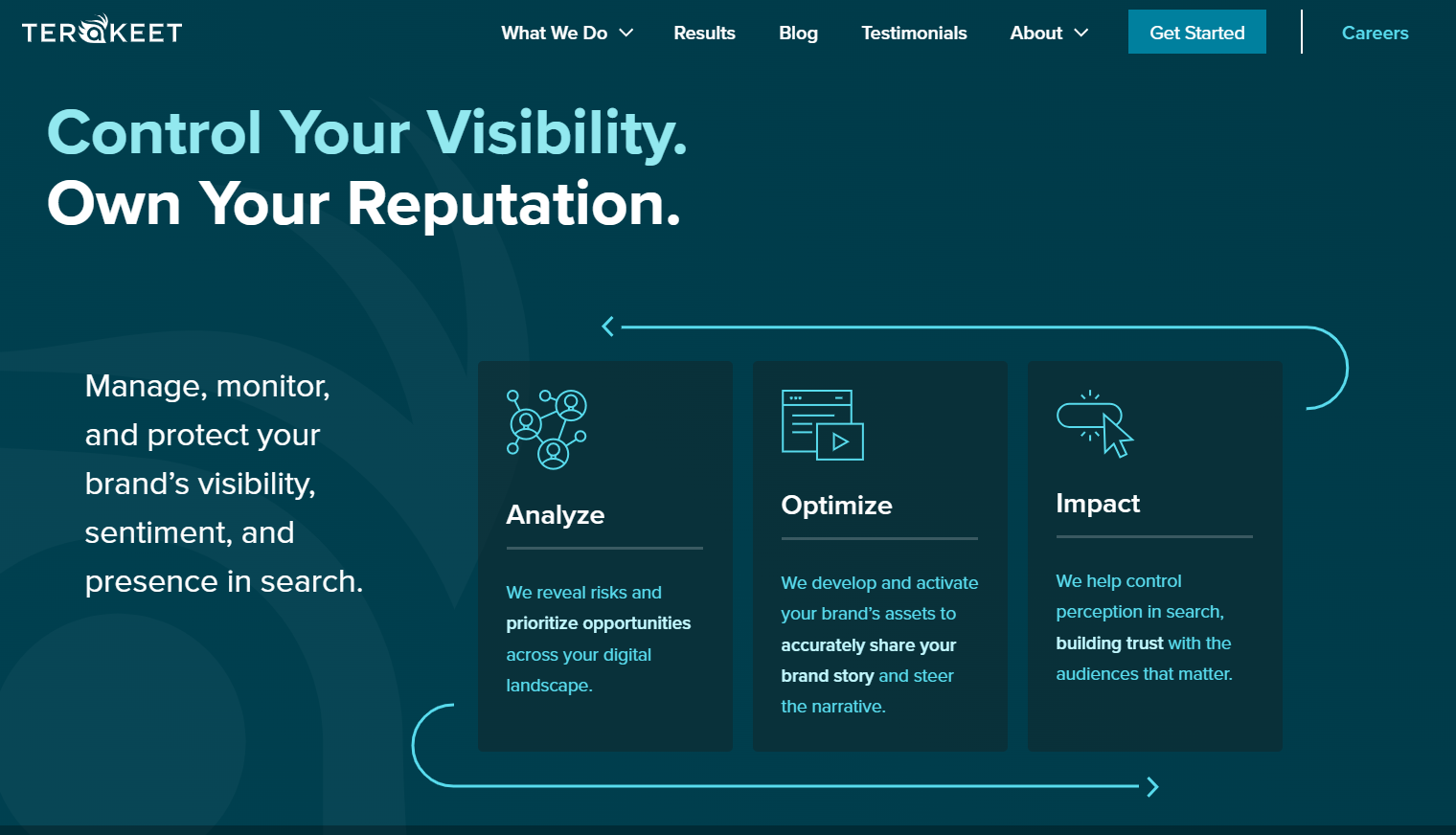
Terakeet is an enterprise SEO agency focused on large-scale, long-term organic growth for established brands. The company works primarily with major enterprises building extensive content ecosystems across competitive markets.
Their approach centers on creating and optimizing high-volume owned content assets designed to drive sustained traffic growth over multiple years. Engagements often include deep competitive analysis, large-scale content production frameworks, internal linking optimization, and technical infrastructure improvements to support high-traffic domains.
Rather than concentrating on tactical link campaigns or short-term ranking lifts, Terakeet emphasizes long-horizon authority building across broad topic categories. This model is particularly effective for brands with significant budgets and the internal capacity to support complex content operations.
Best fit:
Enterprise organizations investing heavily in owned media, large-scale content ecosystems, and multi-year organic growth strategies.
Not ideal for:
Mid-market companies seeking focused authority concentration, aggressive link acquisition, or lean execution models.
8. Polaris: Best for enterprise & ecommerce SEO at scale
Polaris is a UK-based agency specializing in enterprise and ecommerce SEO. Their work often supports global retailers and large brands operating across multiple markets and languages.
Campaigns typically include technical SEO audits, international site architecture planning, migration support, and structured optimization across large product inventories. There is a strong emphasis on resolving scalability challenges — such as managing thousands of product pages, optimizing faceted navigation, and improving crawl efficiency on complex ecommerce platforms.
Polaris integrates technical SEO with performance tracking and commercial alignment, particularly for brands where organic search represents a significant revenue channel.
Rather than operating as a boutique consultancy, Polaris functions as a structured partner for large organizations requiring coordinated, cross-market SEO execution.
Best fit:
Enterprise ecommerce brands, international retailers, and organizations managing complex, large-scale websites.
Not ideal for:
Early-stage startups, small B2B SaaS teams, or businesses seeking lightweight SEO engagements.
How to Select Your Organic SEO Partner with Confidence
Hiring the wrong SEO agency doesn’t just waste budget. It costs time, momentum, and market share.
Organic search compounds. If the strategy is misaligned, the opportunity cost compounds too.
The right partner brings strategic clarity, not just deliverables.
When evaluating providers, don’t compare price alone. Compare thinking.
SEO partner selection checklist
1. Strategic Fit: Are they asking about your funnel, revenue drivers, and customer journey, or just your keyword list? Strong partners design around business outcomes.
2. SEO Depth: Can they speak clearly about technical SEO, content structure, link acquisition, and AI visibility without hiding behind jargon?
3. AI Search Awareness: Do they account for how AI systems surface answers, cite sources, and recognize entities or are they building only for traditional rankings?
4. Customization: Is the roadmap tailored to your product tiers, buying cycle, and competitive landscape, or recycled across clients?
5. Adaptation Process: How do they respond when rankings shift? Is the strategy reviewed and refined regularly, or left on autopilot?
6. Communication Quality: Do they explain complexity in clear language with defined next steps?
Strong partners guide focus. They don’t overwhelm with dashboards.
How to pressure test their real value
- Ask what they would not prioritise for your business. Experienced operators understand trade-offs.
- Ask which KPIs they track closely and which they consider distractions.
- Look for systems thinking. SEO should connect technical execution, authority building, and commercial performance into a coherent growth model.
One filter matters above all:
Can they clearly explain how their SEO decisions translate into sustained business growth, not just short-term ranking changes?
You are not purchasing activity. You are investing in a visibility system designed to build authority, drive qualified traffic, and convert attention into revenue.
Reframing Organic SEO: Your Brand’s Long-Term Visibility Infrastructure
Search engines and AI models reward brands for building recognizable authority.
That requires operators who understand:
- How search systems evaluate entities
- Which signals influence AI-generated recommendations
- How to build authority that compounds rather than decays
- How to design content that is citeable, not just indexable
- How to strengthen domain resilience against algorithmic shifts
Temporary rankings come from activity. Long-term relevance comes from trust infrastructure.
And trust is built through:
- Structured, intent-matched content
- Category-defining BOFU assets
- Consistent high-authority signals
- Meaningful off-site references
- Clear entity and topical alignment
Not writing long-form top-of-funnel guides that now get next to no traffic. Not buying backlinks for a few months to see what sticks.
Modern search systems evaluate brands through a broader ecosystem of signals:
They look at where your company is mentioned, who cites your work, how clearly your content is structured, whether AI models can map your brand to a specific category, and how consistently your on-site and off-site signals support your expertise.
These factors form the credibility profile that determines how visible and trustworthy your brand appears across both traditional search and AI-driven results.
Brands that struggle in this ecosystem treat SEO as a deliverable instead of a long-term visibility engine.
The Shift Toward System-Led SEO
Organic growth now requires treating SEO as a core business function, not a marketing side project.
When SEO is built with clear strategy and defined priorities, it becomes easier to scale. Authority signals compound. Search engines and AI systems interpret your brand more consistently. Visibility becomes steadier and less dependent on constant output.
This is what system-led SEO looks like.
Structure replaces guesswork. Technical clarity supports content performance. Authority signals reinforce commercial pages. The work done today strengthens performance months from now.
With the right strategic oversight, SEO stops being a checklist of tasks and starts functioning as a durable asset.
Brands that approach SEO this way build recognition early. Over time, that recognition becomes difficult for competitors to displace.
In an environment shaped by algorithm updates and AI-driven discovery, resilience matters. A structured visibility system creates stability, and stability allows companies to grow with confidence.

- Best Blogger Outreach Services in the UK [2026] - August 13, 2026
- Best Reddit Brand Mention Services (Honest Review) - August 5, 2026
- Best B2B SEO Agencies for Pipeline Growth [2026] - July 14, 2026
Get more traffic, get more conversions – all without paying for ads 

Let’s chat to see if we can help you multiply your SEO revenue.
Get more traffic, get more conversions – all without paying for ads
Let’s chat to see if we can help you multiply your SEO revenue.
